SINGULAR AND PLURAL NOUNS IN SPANISH III
In the first lesson of this series, we said that when nouns end in a vowel, we form the plural by adding an "s". Although this is so in general, an exception occurs when the vowel is an accented "i" or "u". In these cases (which are fewer anyway) we have to add "es" and remove the accent marke to form the plural.
Examples of this are ñandú / ñandues (rhea / rheas), bisturí / bisturies (scalpel / scalpels), tabú / tabues (taboo / taboos)
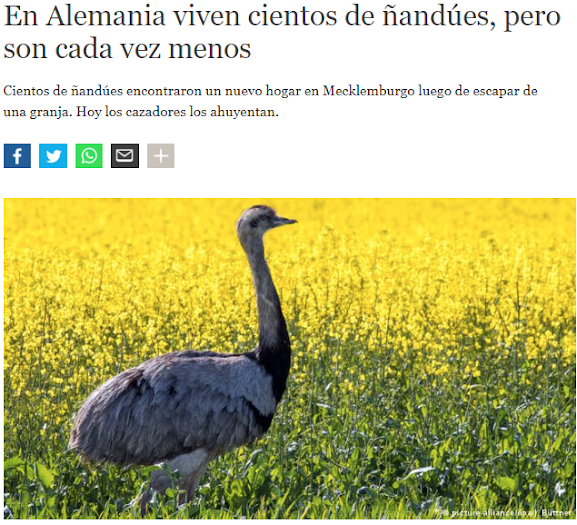
"En Alemania viven cientos de ñandúes, pero son cada vez menos" (Hundreds of rheas live in Germany, but they are fewer and fewer)

"Insólito: un ñandú se escapó de una casa y corrió por las calles de General Rodríguez" (Unusual: a rhea escaped from a house and ran through the streets of General Rodríguez).
Finally, one last case worth considering is that of nouns ending in "z". When that happens, the "z" is replaced by a "c" and the ending "es" is added.
Some examples are lapiz / lapices (pencil / pencils), pez / peces (fish), luz / luces (light / lights), vez / veces (time / times)

"Sorpresivo hallazgo de un pez de aguas tropicales en Mar del Plata" (Surprising discovery of a fish from tropical waters in Mar del Plata).

"Aseguran que hay una 'explosión' reproductiva de peces tras el crecimiento del Paraná" (They assure that there is a reproductive "explosion" of fish after the growth of the Paraná).


Comments
Post a Comment